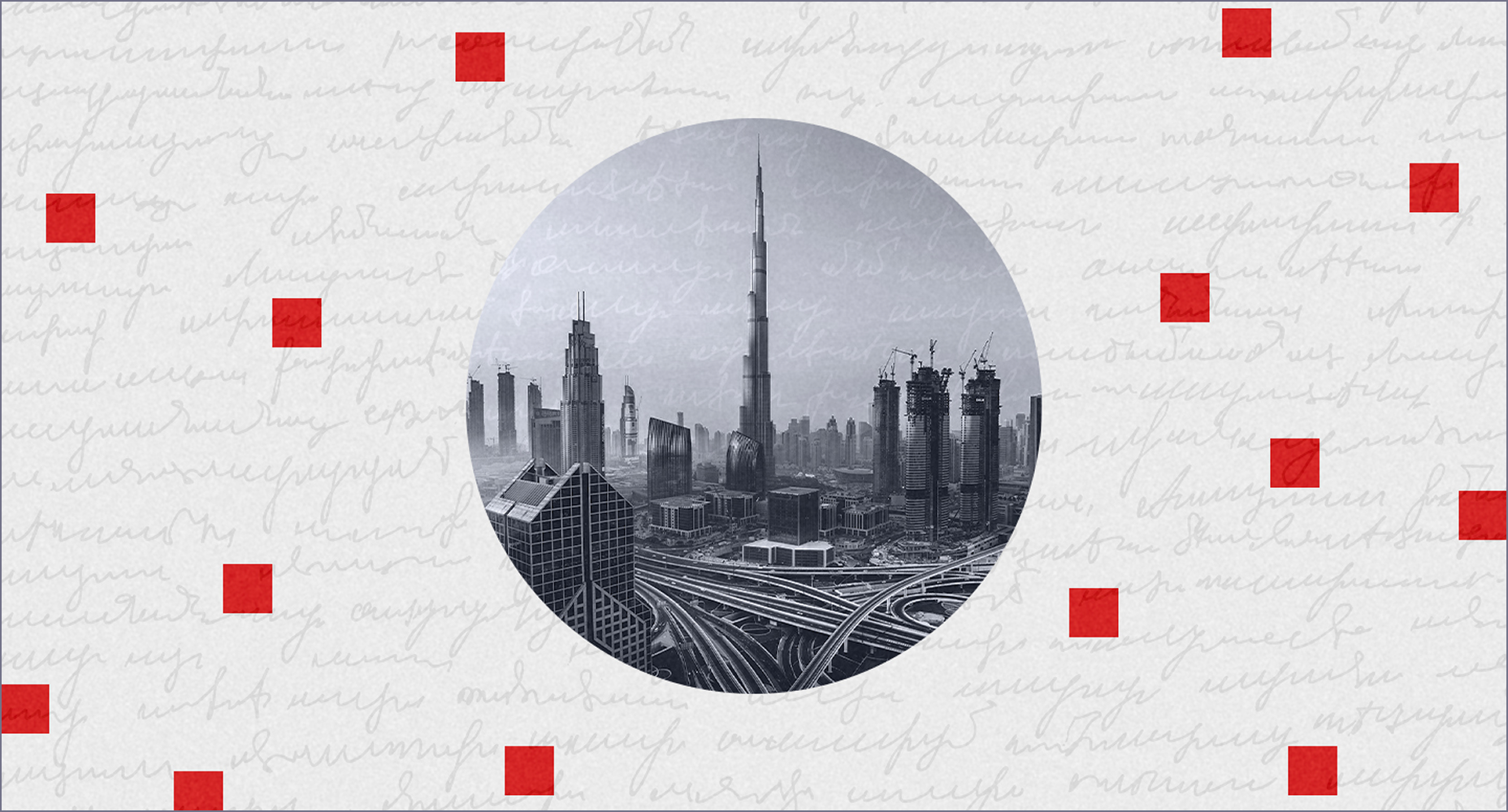
01 The airport at 2 AM
If you are trying to understand our emerging world, a good place to start might be Dubai International Airport at 2 AM in the morning. Underneath the steel and glass terminal with the ubiquitous global brands flashing Gucci or Swatch in a massive neon-lit, duty-free hall, you might be blinded by the 21st century consumerism and fail to see what is right in front of you: one of the most diverse collection of people under one roof on earth.
Henna-bearded Pakistani men in sandals and traditional garb huddled around an iPhone. Stylish European couples en route to the Maldives. Young Filipina nurses heading to contracts in Riyadh. Ethiopian families navigating connections. Chinese engineers bound for infrastructure projects in Africa. Indian IT workers returning to Bangalore from client meetings in London, and Nepali laborers catching some sleep in the quiet corners on their way to construction jobs in the region.
Would-be novelists should spend a week in the airport. The storylines would be endless, but there’s a bigger story at play here.
When historians look back on the first quarter of our century, they will mark it as the era in which the emerging world ceased to be a hinterland of the global economy and became one of its central pillars.
The rise of China, India, broader Asia, and swaths of Africa and Latin America will loom large in that account — but so too will the nexus states and cities that served as the connective tissue and circulatory pumps of this transformation, moving capital, talent, and goods across borders and time zones. The United Arab Emirates stands out as one of the most consequential of those pivotal nexus states – and Dubai International Airport often feels like its epicenter.
02 What is a nexus state?
What is a nexus state? It’s a state positioned at the intersection of the key global flows that shape our world: goods, services, people, data, capital, and ideas. Nexus states and cities are not passive nodes. They are active drivers of these flows. Think Amsterdam in the 17th and 18th centuries, indispensable to the rise of European commerce, or London in the 18th and 19th centuries as the nerve center of an expanding global economy. New York inherited that nexus city mantle through the 19th and 20th centuries; more recently Singapore and Hong Kong emerged as the gateway cities of Asia's ascent and Miami as the hub of the Americas.
Critically, the great nexus states and cities of history rose not simply because of convenient geography but at moments of systemic transition, when old centers of gravity were weakening and new ones had not yet consolidated. Amsterdam rose as Mediterranean dominance fragmented. London rose as new technologies ushered in the Industrial Revolution. Singapore and Hong Kong rose as Asia’s major economies woke from their slumber. The UAE has risen as the post-Cold War unipolar moment has fragmented and as the economic weight of the world has begun its long migration southward and eastward.
The crafters of nexus states also seem to have a keen sense of what’s coming next but, in reality, few can forecast the future.
What distinguishes the crafters of nexus states is their willingness to make big bets on the infrastructure of connectivity, which, as it turns out, is a good bet on the future.
I first introduced the concept of the UAE as a nexus state in a white paper on UAE-Africa ties more than a decade ago. The scholar Christian Henderson skillfully expanded on this idea, and it is today well-established. It was captured neatly in a recent essay by Abu Dhabi-based scholar Kristian Alexander, who describes the UAE as a nexus state that multiplies its influence by connecting regions across Asia, Africa, and Europe, modes spanning sea, air, rail, and digital infrastructure, and sectors encompassing energy, finance, logistics, technology, and culture.
03 The flows
Few places on earth are as connected as the UAE. Dubai’s airport is the busiest international hub in the world, surpassing London Heathrow in 2014 and never looking back. The UAE’s ports are among the busiest and most global transshipment hubs, and the state has been doubling down on trade, signing dozens of new pacts with countries ranging from the Americas to Asia over the past few years. UAE capital – with some $2.5 trillion in sovereign wealth funds – and state-owned enterprises and private businesses are some of the most active investors around the world. According to the United Nations, the UAE has been the largest outward investor from the West Asia region over the past two decades. UAE's population – composed of more than 200 different nationalities, with expatriates making up nearly 90% of residents – might be the most diverse on earth.
What makes the UAE's version of this story distinctive is that its emergence was not born of necessity, as Singapore's was. It was a deliberate strategic choice made against a backdrop of considerable oil wealth — and that choice required resisting the gravitational pull of the petro-state model that has consumed so many of its neighbors.
Consider Dubai, the ultimate trading city with its shipping port, air hub, brand-name airline (Emirates), the free zones, the logistics networks, the skyscrapers, the glitz, the tourist attractions and more -- the commercial republic that has always understood its prosperity as a function of the flows it attracts. Dubai has become a tourist magnet: it welcomed nearly 19 million international visitors in 2024, contributing $70 billion to GDP. Abu Dhabi is something different: a major energy player, yes, more somber, yes, but also one of the world's great pools of patient sovereign capital. ADIA ranks among the largest sovereign wealth funds on earth. Mubadala has become a sophisticated global investor with positions across technology, life sciences, aerospace, and infrastructure on every continent. L'imad, Abu Dhabi's newest sovereign vehicle, is building positions across food security, ports, aviation, and logistics corridors from Africa to Southeast Asia.
Beyond the sovereign wealth funds, the UAE's state-owned enterprises have become globally significant investors and operators in their own right.
Emirates connects over 150 destinations across six continents. DP World operates ports across Africa, South Asia, Europe, and the Americas. Jumeirah runs hotels from London to Shanghai. Emirates Global Aluminium, which produces one in every 25 tonnes of aluminum made worldwide, is building a $4 billion smelter in Inola, Oklahoma — the first new primary aluminum plant in the United States since 1980. It’s expected to create 1,000 direct jobs and nearly double domestic American production.
These enterprises are the visible face of something larger — a country that has systematically positioned itself at the center of major global flows. On trade, the UAE accounts for nearly 2.5% of global merchandise exports. This is remarkable for a country representing just 0.14% of the world's population and barely exceeding 11 million people. Consider this: the UAE moves more international trade than Brazil or Indonesia, countries with populations exceeding 200 million people. On capital, the UAE has been the dominant outward investor from the West Asia region over the past two decades. In Africa, UAE companies pledged over $110 billion in new projects between 2019 and 2023 — more than any other single country in that period, surpassing traditional investors like China, the UK, and France — with over $70 billion directed toward energy and renewable energy sectors."
On people, the UAE's demographics are unlike almost anywhere else: with nearly 90% of its population drawn from over 200 nationalities, it is home to one of the most internationally diverse populations on earth. This model also plays a key role in global remittances. Worldwide, remittances have emerged as a vital development tool, their scale now outstripping both official development aid and foreign direct investment to developing countries combined. All told, nearly $700 billion a year flows to low- and middle-income countries from workers abroad. Every year, roughly $40 billion in remittances flows from the UAE to India, Pakistan, the Philippines, Egypt, Bangladesh, and beyond, making the UAE consistently one of the world's second or third largest sources of remittances globally. This was not by design but as a structural consequence of its labor model — and it contributes to its status as a nexus state. And as South Asian and African economies grow wealthier, those labor corridors are quietly becoming consumption corridors. Workers sending remittances home are giving way to a middle class flying to Dubai to spend.
04 The digital and energy bet
On technology, the UAE is building the UAE-US AI Campus in Abu Dhabi — a 5-gigawatt facility and the largest such project outside the United States. Microsoft has committed $15.2 billion in UAE investments through 2029, including a $1.5 billion equity stake in G42, Abu Dhabi's state-backed AI conglomerate, which is now partnering with OpenAI, Oracle, NVIDIA, and others to build and operate the campus. The strategic logic fits with its role as a nexus state: the UAE sits within 3,200 kilometers of nearly half the world's population, making it a natural hub for AI compute serving the Global South.
For more on how the UAE–US economic partnership is accelerating through backing US innovators, scaling businesses, and creating jobs, sign up for our bi-weekly newsletter.